NAVIRO Drones
Spraying Drones for Sugarcane — Work the Tall Canopy Ground Rigs Can't Enter
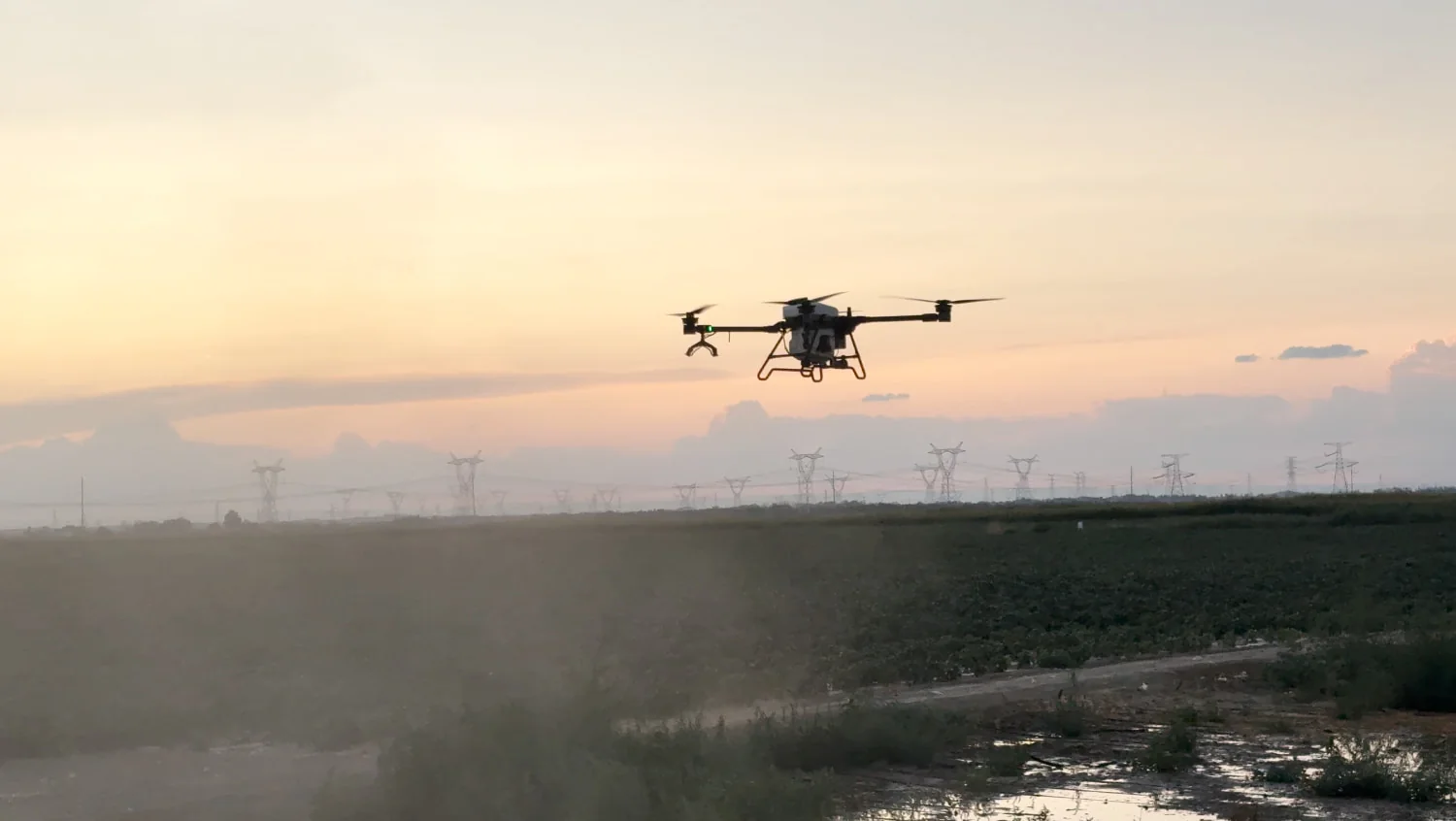
Sugarcane stops being drivable about four months after planting. By mid-season it is a 3-to-4-meter wall of biomass, rows closed, stalks too tall for any wheeled machine — and every wheeled pass after that means crushed ratoon stools, snapped stalks, and yield lost to the sprayer itself, while borers, aphids, and rust thrive deep inside the canopy where tractor booms can't reach.
A spraying drone flies above it all: no wheel tracks, no crushed stools, and rotor downwash that pushes spray down into the canopy instead of skimming over the top. This page covers why sugarcane is a drone-first crop, what to check before you buy, and which machine class fits your operation.
Get a Factory Quote Chat on WhatsApp
Why Sugarcane Is a Drone-First Crop
- Canopy closure locks out ground rigs. Once the rows close, a ground sprayer cannot enter without damaging the ratoon crop it is supposed to protect. A drone never enters the crop.
- Lodged cane defeats wheels entirely. Storms lay cane flat in tangled mats no ground machine can follow — a drone flies above the mess and keeps spraying.
- Pests live deep in the canopy. Borers feed inside stalks and lower leaf layers, where boom spray deposits almost nothing — rotor downwash drives droplets down to where they are.
- Wet fields don't stop drones. Rain-season mud strands ground rigs on field roads; a drone takes off from the headland while the soil is still too soft for wheels.
- Scale rewards throughput. Mills and estates run hundreds to thousands of hectares — refill frequency, not flight speed, decides daily area.
Five Checks Before You Buy a Sugarcane Drone
- Tank size against your block size. Every refill is a landing, a ferry flight, and lost spray time — on 500-hectare blocks, an 80L-class tank means meaningfully fewer refills per day than a small-tank machine.
- Real canopy penetration, not brochure swath. Tall, dense cane needs downwash strong enough to push droplets into the lower canopy where borers feed — watch the field spray pattern, not the headline swath number.
- Accurate, repeatable passes. On thousand-hectare blocks, a small overlap error repeated all day is hectares of double-dosed or missed cane — centimeter-level positioning keeps every pass on its line.
- Terrain following over uneven and lodged cane. Fields are never flat, and lodged patches change canopy height by meters — radar or LiDAR terrain sensing holds spray height above the actual cane.
- Same-day rinse, no tools. Sugarcane juice and sticky adjuvants ferment fast — flush tank, pump, and nozzles at the field edge every day.
Match the Machine to Your Operation
| Operation | Typical scale | Fit |
|---|---|---|
| Smallholder / outgrower blocks | Irregular parcels, under 50 ha | Compact class — nimble on small blocks, low entry cost |
| Estate / cooperative | 50–300 ha, long straight rows | HD540S class — 40L spray / 60L spreading reference |
| Mill-scale / contractors | 300+ ha, throughput decides economics | Heavy-lift class (incl. HD580) — fewer refills per day |
| Largest plantations | Very large blocks, maximum daily area | FP800 — 80L spray / 120L spreading, 85 kg max payload, 10 m swath |
Sugarcane rewards capacity: heavy-lift classes earn their place wherever daily hectares decide the economics; compact and mid-size classes fit outgrower programs where maneuverability matters more.
Pricing depends on configuration, battery count, and delivery terms — request a factory quote and tell us your field size, variety, and target pest or disease.
A Spray Day in the Cane
- Scout the block. Note lodged patches, power lines, mill truck traffic, and irrigation pivots crossing the cane.
- Plan long passes along the rows, stage refills and battery swaps at headland nurse points to keep ferry distance short, and rotate batteries so one set charges while the other flies.
- Mix to the label. Borers, rust, and ripeners each have their own rate and water volume — calibrate liters per hectare for today's canopy, not last season's.
- Spray in the calm hours. Early morning or late afternoon, when wind is low and thermals aren't lifting droplets off the canopy. Heat-of-day spraying wastes chemical.
- Rinse and record — same day. Flush tank, pump, and nozzles at the field edge before residue sets, and log block, variety, product, rate, and growth stage — mills and export buyers increasingly ask for spray records.
One Thing to Check Early — Export Licensing for Large Tanks
Large-tank configurations (spreading tanks above 80 L) fall under China's dual-use export licensing: one licence per order, and approvals take time. New rules take effect 18 November 2026 — tell us your destination and order scope early so the documentation, including the end-user and end-use statement, is ready before the season.
Frequently Asked Questions
Can a drone spray sugarcane after the canopy closes?
Yes — that is the main advantage: ground sprayers damage ratoon stools once the canopy closes, while a drone flies above the crop all season.
Is drone spray effective against sugarcane borers?
Penetration matters more than raw volume — rotor downwash pushes droplets into the canopy where borers feed, and timing with scouting and the pest's life cycle matters as much as the machine.
How many hectares can a drone cover per day in sugarcane?
It depends on tank size, swath width, ferry distance, and battery rotation. Machines that spend more of the day spraying and less refilling cover more ground.
Can the same drone spread fertilizer in sugarcane?
Yes — with the spreading hopper configuration, the same aircraft broadcasts granular fertilizer over the cane, and the tank-to-hopper swap is mechanical, not a workshop job.
Do I need a licence to spray sugarcane by drone?
It depends on your country — many require drone registration, a pilot certificate, and a chemical-application permit. We confirm export-side requirements during quoting; local operating rules are the buyer's responsibility.
NAVIRO Drones is proudly powered by WordPress