Equipment buying resources · NAVIRO Drones
Cargo Drone Payload Capacity: How to Compare Real Loads
Published 7 October 2026 · Equipment purchasing guidance
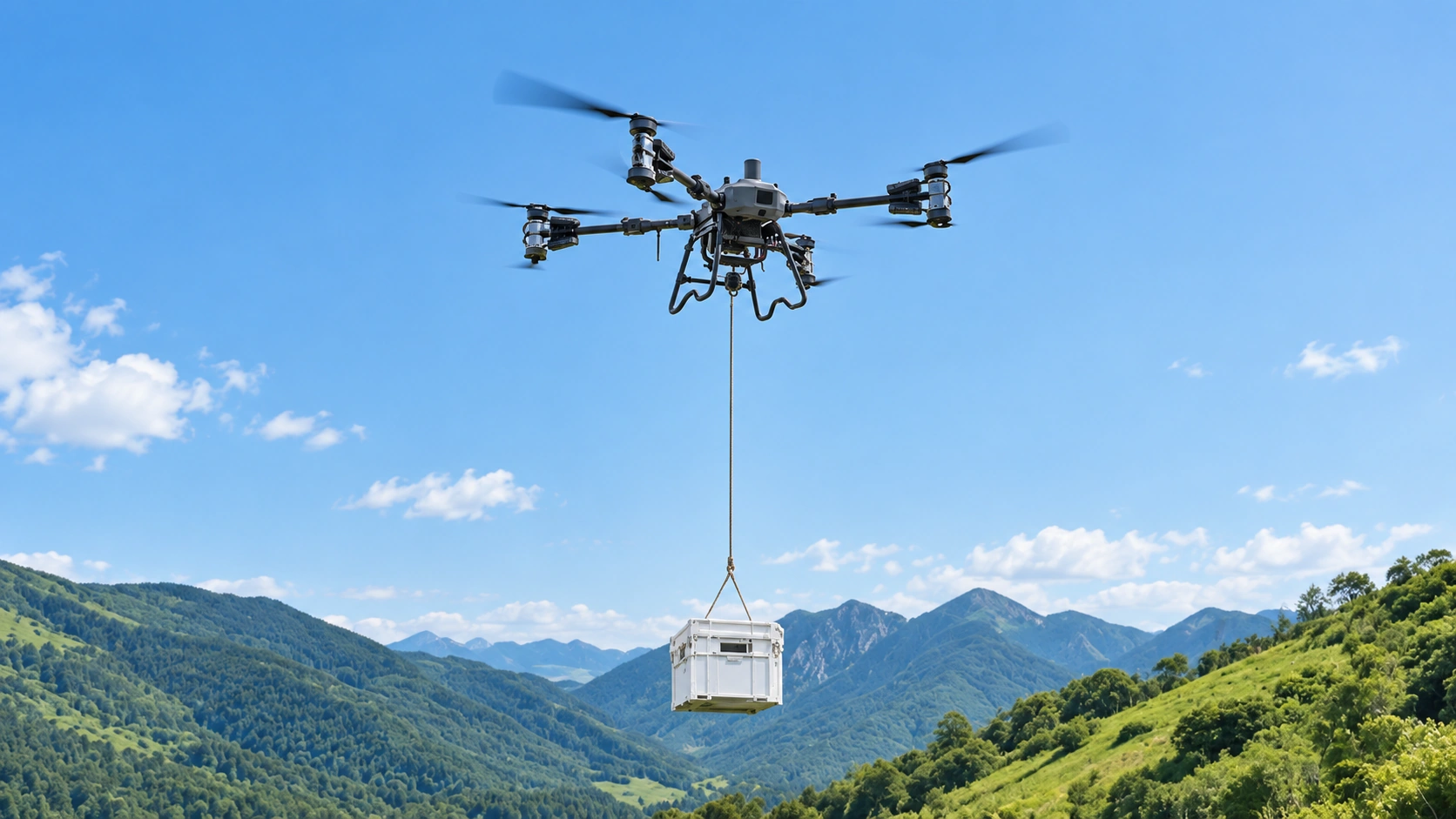
Cargo drone payload capacity is useful only when you know the configuration and conditions behind it. The advertised lifting figure, flight-distance figure and photograph may describe different setups. Before comparing suppliers, define your complete load, route and delivery method, then request performance information for that combination. This guide helps you turn a headline capacity into a purchasing question. It does not calculate a safe load for an unverified aircraft or replace the supplier’s operating limits.
Understand cargo drone payload capacity before comparing
Ask the supplier to define the figure in writing. Does it describe goods alone, a complete suspended load or a particular cargo assembly? Which battery and task configuration does it use? Request the applicable conditions and supporting specification rather than infer the answers from a product title.
Keep payload, total aircraft weight and task-equipment limits distinct. The lifting assembly can have its own relevant limits. A larger airframe headline does not establish that any hook, sling or container can be fitted or used with it.
For a V180 equipment enquiry, the supplier brochure’s lifting figure remains a reference. Ask for the current cargo configuration and route-specific review before treating that number as usable capacity on your project. Agricultural tank figures belong to a separate configuration discussion.
Count the complete load your quotation needs to address
List the goods, packing and handling items separately. Include dimensions and the proposed attachment arrangement. Ask the supplier which items count toward the quoted payload definition. If the delivery method has not been chosen, describe the receiving site rather than guess the hardware.
Illustrative enquiry example: a buyer has 60 kg of goods, 8 kg of packing and 4 kg of external attachment items. The submitted load inventory totals 72 kg. That arithmetic helps identify the question; it does not establish that a particular aircraft can lift it. The supplier still needs to clarify its payload definition, handling configuration and operating conditions.
These are hypothetical numbers, not a NAVIRO customer case or V180 test result. Retain the separate entries in your enquiry so the supplier can explain what is included in its assessment. Do not discard the packing and attachment details because the goods alone appear below a brochure maximum.
Cargo drone payload vs range: match the configuration
Request distance information for the intended load, battery arrangement and route conditions. Ask whether the number describes a one-way trip, a return task or another test. Clarify what happens at the receiving end and whether the aircraft returns loaded or unloaded.
A maximum payload and a maximum flight distance should not be assumed to occur together. A useful purchasing comparison links each figure to its configuration and test conditions.
The DJI FlyCart 30 official product page distinguishes cargo and winch configurations and attaches conditions to performance specifications. It provides an example of the level of detail to request from a supplier. Its figures and functions are not evidence for V180 or another NAVIRO equipment offer.
If you have only two unrelated headline figures, ask for clarification before calculating a delivery plan. This is especially important when comparing offers with different batteries or handling equipment.
Describe the route beyond its horizontal distance
Provide launch and receiving locations, elevation difference, maps or site photographs and the proposed delivery sequence. Explain access at both ends. Identify the conditions your team expects the supplier to consider, rather than asking only whether the aircraft can cover a straight-line distance.
For a purchasing review, distinguish the complete route from a map measurement. The supplier needs to know the task you actually intend to perform. Any route assessment should identify its assumptions and the operating information still required.
Our remote-site cargo enquiry page organizes these project inputs. It is a route for equipment discussion, not a statement that every remote location is suitable or that permissions are already in place.
Choose the delivery method before assuming the package
State whether the receiving plan involves landing, lowering a load or another proposed method. Ask which handling equipment is available for the quoted aircraft and which components are included. A suspended-load photograph does not confirm a winch, cable length or delivery mechanism in the order.
For construction enquiries, describe the material dimensions and the receiving arrangement. Ask how the proposed assembly relates to the load and project conditions. Do not treat an agricultural aircraft with a stated lifting function as a complete, verified construction delivery system.
If the supplier proposes a different handling method, update the equipment list and route question together. Comparing only the airframe after that change leaves an important part of the purchasing decision unresolved.
A comparison table for heavy lift drone selection
Give each supplier the same brief and ask for the same information. Mark unanswered items as pending rather than replace them with estimates from another model. This makes gaps visible without manufacturing a precise-looking range calculation.
| Comparison item | Evidence to request |
|---|---|
| Payload definition | Included load items, configuration and applicable limits. |
| Route performance | Load, battery setup, distance definition and stated conditions. |
| Handling equipment | Included assembly, interfaces and operating instructions. |
| Purchase scope | Accessories, documents, support responsibilities and exclusions. |
When an item is essential to your project, resolve it before accepting the offer. Current configuration documents should take priority over older promotional material. Keep the final specifications with the order for later equipment and replacement enquiries.
Drone lifting capacity: common purchasing questions
Is maximum payload the same as usable payload on my route?
Do not assume they are identical. Request the payload definition and a review of your load, configuration and route conditions. A brochure maximum is not a project-specific approval.
Does packing count as payload?
Include packing and attachment items in your enquiry, then ask how the supplier defines the quoted payload. Keeping a separate load inventory prevents an important assumption from being hidden.
Can I use the maximum payload and maximum range together?
Only use linked specifications confirmed for the same configuration and conditions. Separate maximum figures do not establish a combined capability.
Does a cargo drone quotation include a winch?
Not necessarily. Request an itemized handling-equipment list and confirm the delivery method. Do not infer included hardware from promotional images.
What information is needed for a V180 enquiry?
Send the load inventory, dimensions, attachment proposal, route, elevation difference, receiving plan, quantity and destination. Ask for the current cargo configuration and supporting documents.
Turn your lifting task into a clear equipment enquiry
Start with our cargo drone equipment page, then send your load and route requirements. NAVIRO coordinates the supplier discussion around the proposed configuration. You can then compare an itemized offer and its supporting information instead of relying on a headline payload alone.
Application images are AI-enhanced illustrations based on supplied product references, not customer-project photographs or proof of field performance. Verify hardware and configuration with the original references and current quotation.