
Wheat Spraying Drones
Review the aircraft, spraying assembly and support package for wheat-field operations. Start with your field layout, crop stage and destination requirements.
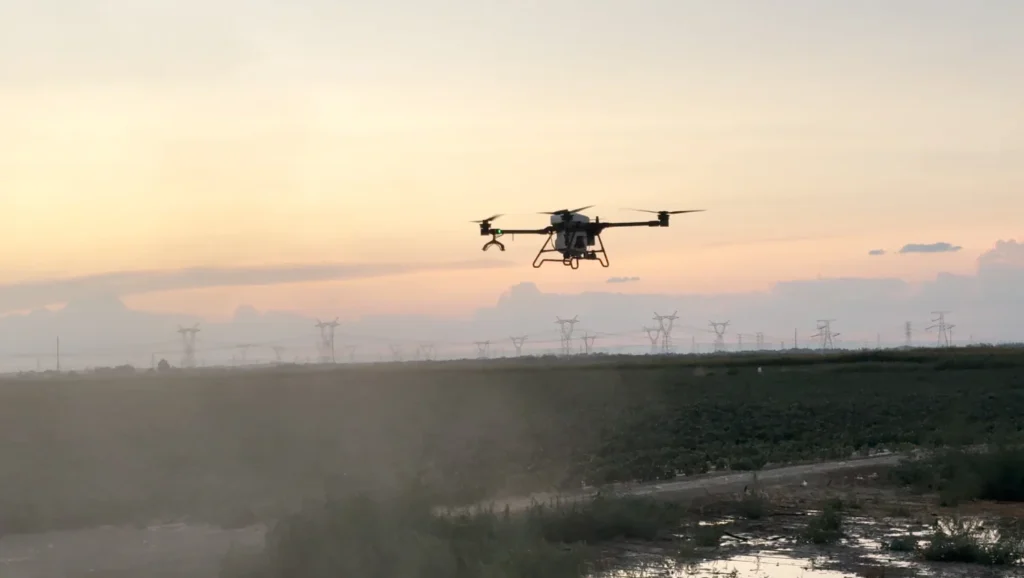
Wheat is a broadacre crop with a brutal spray calendar. Fungicide timing is set by the crop, not by the weather: miss the heading window for Fusarium head blight, and no amount of later spraying recovers the grade. Ground rigs need dry soil, wide tramlines, and a long weather window — three things wheat country rarely offers at the same time. A spraying drone needs none of them.
This page covers why wheat rewards drone spraying, what to check when comparing models, and which Naviro platforms fit small, mid-size, and large wheat operations.
Why Wheat Rewards Drone Spraying
Wheat fields are large, flat, and open — ideal drone territory — and the economics of drone spraying show up in four places:
- No tramlines, no compaction. Every ground-rig pass sacrifices a strip of crop to wheel tracks and compacts the soil beneath them. A drone flies over the crop, so 100% of the field stays in production and the soil structure is untouched.
- Access when the ground is wet. The most important wheat sprays often fall right after rain, when the soil is too soft for a heavy sprayer. A drone sprays on schedule because it never touches the ground.
- Late-season access. Once wheat is tall and the canopy has closed, a ground rig physically cannot enter without flattening crop. A drone applies heading-stage fungicide and late aphid control from above, at the growth stage where they matter most.
- Precision on big fields. RTK-guided passes keep swath overlap consistent across a 100-hectare block. No skips along the headlands, no double-dosing where passes meet.
What a Wheat Spraying Drone Must Do
Wheat work is high-area, low-obstacle flying. The specs that decide performance are different from orchard or paddy work:
- Swath width. On open wheat, a wide, even swath is the main productivity lever. A 10m swath with RTK guidance keeps passes tight and overlap consistent across large blocks.
- Tank size matched to field size. Bigger fields justify bigger tanks: fewer refill trips per block, more of the working window spent spraying. Small or fragmented fields favor a lighter, more maneuverable machine.
- RTK positioning. Centimeter-level accuracy keeps pass-to-pass overlap uniform — the difference between even coverage and striping across a broadacre field.
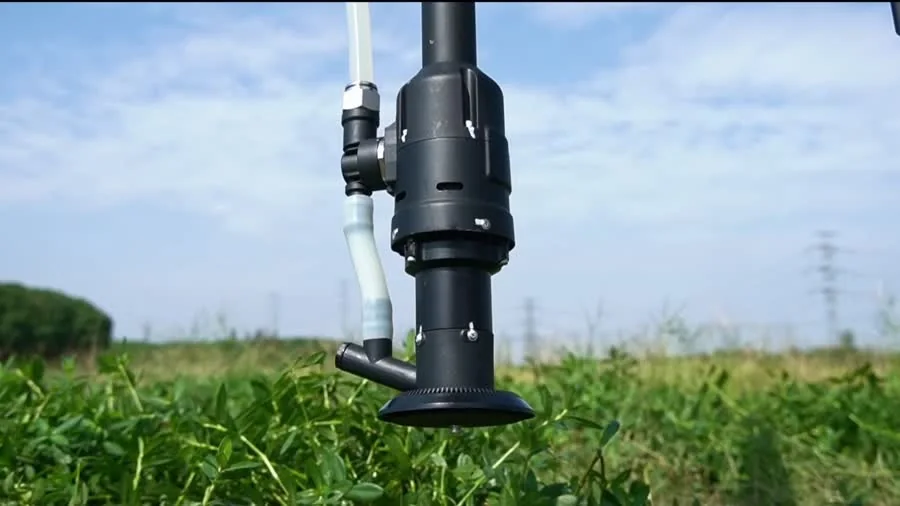
- Drift control at field edges. Wheat fields sit next to roads, neighbors’ crops, and watercourses. A system that holds a consistent droplet spectrum and a steady height above the canopy reduces off-target drift at the boundaries.
- Fast turnaround. The wheat spray window is short. Quick-swap batteries and a plug-in tank design keep the aircraft flying while packs charge and the next load is mixed.
Choosing the Right Drone for Your Wheat Operation
| Operation | Typical field layout | Recommended fit |
|---|---|---|
| Small farm / mixed holding | Small or fragmented fields | HD525 (25L class) — light, easy to transport, economical to run |
| Mid-size farm / cooperative | Mid-size blocks, several fields | HD540S — 40 L tank; up to 10 m spray width at the brochure reference conditions (3.5 m ± 0.5 m height, 3 m/s); RTK base station optional. Confirm field suitability. |
| Large farm / estate | Large contiguous blocks | HD580 — 70L spray / 100L spreading |
| Industrial-scale / contractor fleet | Very large blocks, high daily area | FP800 — 80L spray / 120L spreading, 85 kg max payload |
Off-season, the same aircraft earns its keep: swap the spray tank for a spreading hopper and broadcast granular fertilizer or cover-crop seed across the same fields.
Pricing depends on configuration, battery count, and delivery terms — Request a Quote and tell us your field size and spray program.
Wheat Spray Timing at a Glance
| Growth stage | What you are protecting against | Why drones help |
|---|---|---|
| Tillering | Early weeds, first disease pressure | Early access without rutting soft spring soil |
| Stem extension | Leaf rust, septoria, aphids | Full-field coverage before canopy closes |
| Heading / flowering | Fusarium head blight — the grade-deciding spray | On-time application even after rain, when ground rigs are parked |
| Grain fill | Late rust, aphids | Access to tall crop without flattening it |
Application rates, products, and timing always follow the local label and agronomist advice for your variety and region. The drone delivers the program you choose — it does not replace it.
Frequently Asked Questions
Can a spraying drone cover a large wheat field efficiently?
Yes. On open, obstacle-free wheat, a drone with a wide swath and RTK guidance works through large blocks in steady passes. Daily area depends on tank size, refill distance, and ground crew — tell us your average field size and we’ll model a realistic figure.
Will the rotor downwash flatten wheat?
No, when flown at the correct height and speed. The downwash opens the canopy and drives droplets downward; it does not lodge healthy wheat at normal operating heights.
Do I still need tramlines if I spray by drone?
No. That is one of the main gains: the whole field stays in production, and you stop maintaining wheel-track strips that also compact the soil beneath them.
Can the same drone spread fertilizer on wheat?
Yes. With the spreading hopper configuration, the same aircraft broadcasts granular fertilizer or seed. The tank-to-hopper swap is mechanical.
Do I need a license to spray wheat by drone?
It depends on your country. Many countries require drone registration, a pilot certificate, and a chemical-application permit. We will confirm export and documentation requirements for your destination during quoting; local operating rules are the buyer’s responsibility.