
Home / Applications / Drone seeding
Drone seeding equipment for seed broadcasting
A seed drone broadcasts material from a spreading assembly over a field. It does not place seed at a controlled depth like a seed drill. Start with the seed specification, then review the metering assembly, aircraft and power package together.
NAVIRO coordinates equipment sourcing and export enquiries. Compatibility, included components and acceptance checks are confirmed for your material and the quoted revision.
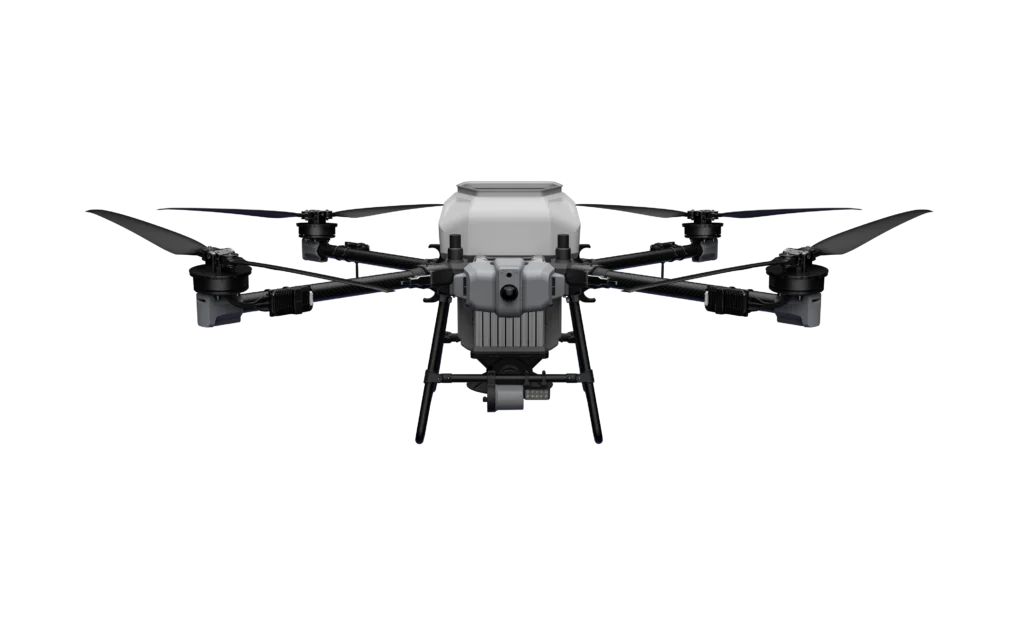
FP800 spreading configuration reference. This image does not establish suitability for a particular seed.
Seed drone, spray drone or seed drill?
| Requirement | Equipment to review | Question before ordering |
|---|---|---|
| Broadcast seed onto the surface | Aircraft with a seed-compatible spreading assembly | Has this metering assembly been evaluated with your seed size, coating and condition? |
| Apply liquid material | Spray tank, pump and nozzles | Does the specified liquid match the installed spray system? Review liquid application equipment. |
| Place seed at depth or in rows | A planting method providing the required placement | Do you require depth control or row spacing? State this before shortlisting a broadcast drone. |
What job are you preparing?
Cover crop broadcasting
Describe the existing crop, field access and intended establishment method. Your local agronomic plan determines timing and rate; the equipment review addresses delivery of the specified seed.
Rice seed broadcasting
Identify the exact seed condition, including any treatment or moisture information. Do not assume settings for dry material apply to a differently prepared seed.
Mixed seed enquiries
List the individual materials and proportions. Ask whether the proposed delivery mechanism has been checked with that mixture rather than relying on a setting for one component.
Send a seed specification, not only a hopper size
| Information | What to provide or request |
|---|---|
| Seed identity | Species, product name, supplier data sheet and any coating or treatment. |
| Physical condition | Available seed-size range, bulk density and storage or moisture information. Mark unknown measurements as unknown. |
| Field brief | Individual block areas, access, loading locations and the target rate established in your own application plan. |
| Equipment scope | Aircraft, exact spreader revision, controller, power equipment and any conversion parts. |
| Acceptance evidence | Material-specific instructions, conditions behind discharge and width figures, and the proposed distribution-check method. |
A hopper volume is not a permitted seed weight. Request both the assembly volume and the load limit for the actual aircraft configuration.
Review the spreading assembly before selecting the aircraft
The FP800 model reference includes an optional SP-7 spreading assembly with a 120 L hopper and an 80 kg maximum material load in the supplied manual. Those figures do not establish compatibility or an operating setting for your seed. Confirm the quoted revision and material review separately.
For other configurations, compare the HD540S and HD580 model references. Ask which assembly is actually included. Use the granular fertilizer equipment page when fertilizer, rather than seed, is your main task.
Questions to settle before ordering
Does fertilizer capability prove seed suitability?
No. Ask for a separate review of your seed and the installed metering assembly. A material name alone is not enough to confirm delivery settings.
Is aerial seeding the same as a seed drill?
This enquiry concerns surface broadcasting. If the requirement includes controlled placement depth or row spacing, state that explicitly; do not assume a broadcast assembly will provide it.
What belongs in the quotation?
List the aircraft, spreading assembly, batteries, charger, controller, conversion parts and component references separately. Identify any material checks still outstanding before agreeing the final configuration.
Prepare your seed drone enquiry
Send the seed product information, field area, intended rate, destination and quantity. Add photographs of the material and any existing spreader labels. For replacement components, use the hopper and spreader parts guide.