
Rice Spraying Drones for Paddy Fields
Compare rice spraying drones for flooded paddies, fragmented plots and cooperative work. Check the spray system, refill access and charging plan before requesting an itemized quote for your fields.
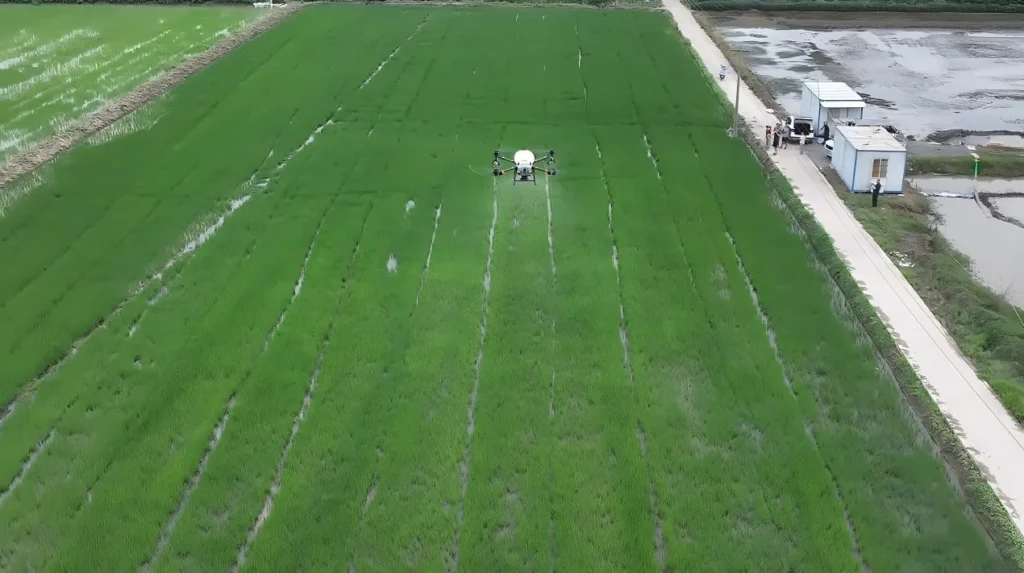
The Rice Spray Windows That Decide Yield
Use the work your agronomist has already specified to decide which applications the equipment must support:
- Blast (Pyricularia) prevention. Leaf blast moves fast in humid, nitrogen-heavy paddies. The fungicide window is narrow and often coincides with standing water after rain — ground rigs are stuck at home. A drone sprays on schedule, from above the flooded field.
- Sheath blight and bacterial leaf blight. Both start in the lower canopy, where hand-lance and boom coverage is weakest. Rotor downwash is the mechanism that gets droplets to the base of the plant instead of settling on the flag leaf.
- Stem borers and planthoppers. Second-generation stem borers and brown planthopper waves arrive late, when the field is knee-deep and the canopy is closed. This is the spray a manual team dreads and a drone does routinely.
- Late-season grain filling protection. Head-stage fungicide and micronutrient passes decide grain weight and milling quality. Late-season access is where drones have no ground-based competition at all.
- Direct-seeded rice (直播稻). Dry and pre-germinated seed can require different handling. Give the supplier your seed type and condition, then ask whether the proposed spreading assembly can deliver it consistently. See the IRRI direct-seeding overview for crop-establishment context.
Two to three rice crops a year (common across Southeast Asia and South Asia) means two to three full spray cycles per year on the same machine. Few other crops give a drone this much annual utilization.
What a Rice Spraying Drone Must Do
Not every spray drone suits paddy work. Check five requirements before comparing models:
- Corrosion and humidity resistance. A paddy drone lives in standing water, mud, and chemical mist. Check the model’s published protection rating and the cleaning procedure for the aircraft and spray assembly.
- Canopy penetration, not just swath width. Rice disease lives in the lower canopy. Droplet delivery — downwash strength, adjustable droplet size, a stable height above the canopy — matters more than a headline swath number.
- Terrain following over bunds and uneven levees. Paddies are divided by raised bunds. Radar-assisted terrain following keeps the spray height constant instead of dosing the bund tops and starving the low spots. This is why drones win on wet ground, flying above the water while ground rigs cannot enter the field.
- Quick-swap tanks for the multi-window season. Paddy work means frequent chemistry changes (fungicide today, insecticide tomorrow, fertilizer the day after). Fast tank swaps and separate tank options keep turnaround minutes, not hours.
- Spreading capability for direct seeding. If your region is moving toward direct-seeded rice — and much of Southeast Asia is — a compatible spreading tank turns the drone into a two-season machine.
Choosing the Right Drone for Your Rice Operation
- Smallholder plots and fragmented paddies (under 20 ha). Light, maneuverable aircraft with fast setup. A 40L-class machine (e.g., Naviro HD540S) keeps per-flight cost low on small blocks.
- Cooperatives and service teams (20–200 ha). An 80L-class platform with a wide swath covers multiple farmers’ paddies per day and spreads seed in season — the machine that a cooperative shares across members. (Naviro FP800 / HD580 class.)
- Large contiguous rice operations (200 ha+). Maximum payload and swath, paired with a battery rotation plan, to keep the aircraft flying through the narrowest disease windows.
Whatever the size, size the purchase to the season’s workload, not one crop: two or three rice crops per year multiplies every efficiency gain.
Export documents and delivery planning
Send the destination, intended use and exact aircraft and assembly before agreeing on delivery. Ask which export checks and documents apply to the quoted package and which local import or operating steps you need to verify. Use the rice field equipment checklist to prepare the configuration and site details.
FAQ — Rice Spraying Drones
Can a drone really reach the lower canopy in flooded paddies?
Coverage depends on the canopy, droplet settings, flight height and conditions on the day. Ask how the proposed setup is checked for deposition at the target height in your crop.
Will spraying over water cause more drift?
Check the product label, local requirements and site conditions. Tell the supplier where watercourses, adjacent crops and field boundaries are, and ask what operating limits apply to the proposed configuration.
Can the same drone spread seed for direct-seeded rice?
Ask for a separate compatibility check for your seed and spreading assembly. Send whether the seed is dry, treated or pre-germinated, along with the intended rate and any flow or clumping issues.
How many hectares per day can a drone cover in paddies?
It depends on tank size, swath, ferry distance to the refill point, and battery rotation. Give us your paddy layout in the quote form and we’ll size it.
Is a drone cheaper than hiring a spray crew for rice?
Compare a local service quote with your total ownership costs for the same area and applications. Include staff time, power, maintenance, parts and the number of workable days.