Category: Uncategorized

  • Drone spraying versus traditional farming: where each method really comes into its own

    Drone spraying versus traditional farming: where each method really comes into its own

    Drone spraying versus traditional farming: where each method really comes into its own

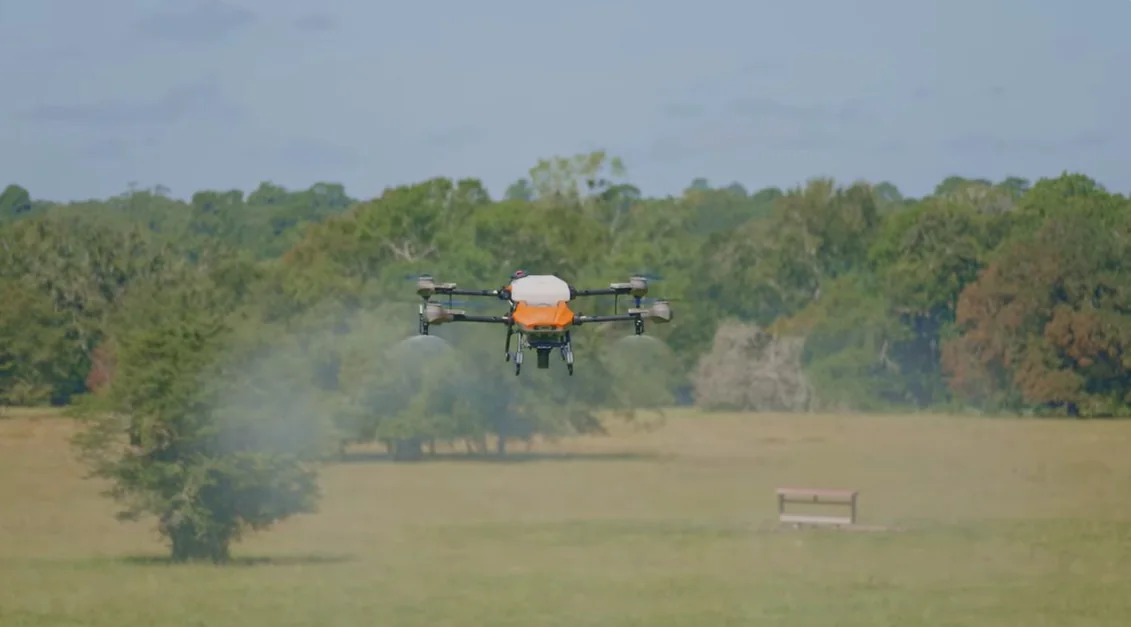
    Drone spraying does not replace tractors everywhere – it offers advantages where ground-based machinery is slow, gets stuck or causes damage, and it has disadvantages where a large machine can simply cover the hectares in flat, dry, open fields. A fair comparison must be made on a case-by-case basis: cost structure, terrain, timing and crop damage must be taken into account, rather than making a blanket judgement.

    Costs: two different structures, not two prices

    With a tractor-drawn or self-propelled sprayer, the costs are concentrated on a large machine, whose fuel, tyres and repairs – due to soil compaction – as well as the labour costs of an operator are spread across a very high daily output. With a spraying drone, the costs are distributed differently: the initial purchase cost of a significantly smaller machine, a fleet of batteries and a charging system as the main running costs, plus an operator who works plot by plot at a lower daily output.

    Therefore, comparisons per hectare are misleading if presented without context. On large, contiguous fields operating at full capacity, the cost per hectare of a ground-based sprayer is virtually unbeatable. For small, scattered or frequently treated plots, the cost picture for drones changes: there is no travel time between fields, no losses due to turning or headland manoeuvres, no costs for wheel damage, and treatment can be carried out on a single plot on the very day it is needed, rather than only when the sprayer’s route reaches it. Buyers who use drones commercially generally regard them as a supplement that takes on the tasks which the sprayer struggles to handle, rather than as a complete replacement.

    Terrain and Accessibility

    This is the drone’s most obvious advantage. Ground vehicles require a surface that is dry enough to support the vehicle, level enough to drive safely, and well-connected enough to travel back and forth between fields. Drones, on the other hand, require only a take-off point and a place to refuel. Terraced plots, orchards on slopes, waterlogged rice fields, fields criss-crossed by canals or paths, and areas that turn to mud after rain are routine for drones, but pose a problem for vehicles. In plantation and rice-growing areas, this single factor – accessibility – is usually the deciding factor in the purchase decision, even before any cost calculations are made.

    The ground-based sprayer has no advantage when it comes to terrain. However, on terrain suitable for it, it retains a capacity advantage. A wide spray boom on a flat, 100-hectare field covers an area that no current spray drone can reach, and does so for hours on a single tank of diesel rather than requiring a battery change.

    Timing and crop damage

    Two cost factors associated with conventional spraying are rarely mentioned in brochures. The first is wheel tracks: every time a ground-based sprayer passes over a field, a strip of the crop is crushed and the soil beneath it is compacted; Passes through dense stands late in the season (the timing of fungicide application on maize is the standard example) may be physically impossible without causing damage. A drone can fly the same path without leaving any tracks and without compacting the soil – regardless of the height of the plants.

    The second point is timing. Crop protection is a window-of-opportunity business: the right day is more important than the perfect machine. A drone can treat a wet field block the morning after a downpour, whilst the field is still impassable for wheels, and can be repositioned between small field blocks within minutes. Where treatment windows are narrow and the weather is unreliable, this responsiveness protects the yield in a way that is never reflected in the stated capacity figures.

    Factor Spray drone Tractor / ground vehicle
    Cost structure Smaller machine + battery fleet + charging; costs arise from rotation and labour per plot One large machine + fuel + tyres; costs spread over very high daily capacity
    Best terrain Terraces, hills, wet rice paddies, small or scattered plots, tall crops Large, flat, dry, contiguous fields
    Crop damage No wheel tracks, no soil compaction, any crop height possible Ruts and soil compaction on every pass; late-season access may be impossible
    Timing Treats individual plots on the right day, switches between plots within minutes Efficient on a planned route; hampered by wet ground
    Daily capacity Lower; determined by refilling, charging and changing plots Higher on suitable fields; determined by boom width and field size
    Product use Low application volumes, targeted plots High-volume applications across entire fields

    Deciding based on the scenario

    Opt for the drone first if your plots are small, terraced, damp or scattered; if you are spraying tall crops late in the season; if you need to treat individual fields on specific days; or if you offer spraying services for precisely this type of fragmented farmland. Stick with the sprayer for the time being if your farm is large, flat and contiguous, and you carry out large-scale, high-volume spraying operations – and consider the drone as a second machine to handle the plots that the sprayer struggles with. Most professional farms we speak to end up using both, deploying each where they can best utilise their strengths.

    Frequently Asked Questions

    Is spraying with drones cheaper than spraying with tractors?

    Drone spraying vs tractor spraying comes down to cost structure, not a single price. Per hectare on large, flat fields at full capacity, generally not – in such cases, ground-based equipment has the edge in terms of capacity. However, on a per-operation basis for small, damp, terraced or scattered plots, it often is, once transport time, wheel damage and missed treatment windows are factored in. The two methods have different cost structures, so the honest answer depends on your fields and not on a figure from a brochure.

    Can a spraying drone completely replace a tractor-mounted sprayer?

    For small and fragmented farms, as well as those based on terraces, rice fields or orchards, the answer is yes – many operate exclusively with drones. On large, contiguous arable farms, drones generally complement the sprayer rather than replacing it, and handle the plots, time windows and crop heights that the sprayer struggles with.

    Does spraying with drones damage crops?

    No wheel marks and no soil compaction – the drone never touches the field. This is the structural advantage over any ground-based method, which is why drones are used for late-season spraying in tall crops, where a spray tanker would destroy part of the crop it is actually meant to protect.

    Which method uses less plant protection product?

    Drones spray small quantities in targeted, GPS-guided passes and can treat only those plots that require it, which reduces overall consumption in cases of isolated infestations. Field-wide spraying programmes using high volumes remain the domain of ground-based sprayers. Savings in pesticide consumption stem more from targeted application and the right timing than from the aircraft itself.

    Are you considering using a drone in addition to your spray vehicle – or instead of it? Find out about the prices of the drones in our agricultural drone price guide, compare the FP800 and HD540S models in terms of their capacity, and then contact us via WhatsApp or use the quote request form with your field map to receive an honest assessment of suitability.
  • How to Use Drones in Agriculture: A Complete Workflow

    How to Use Drones in Agriculture: A Complete Workflow

    How to Use Drones in Agriculture: A Complete Workflow

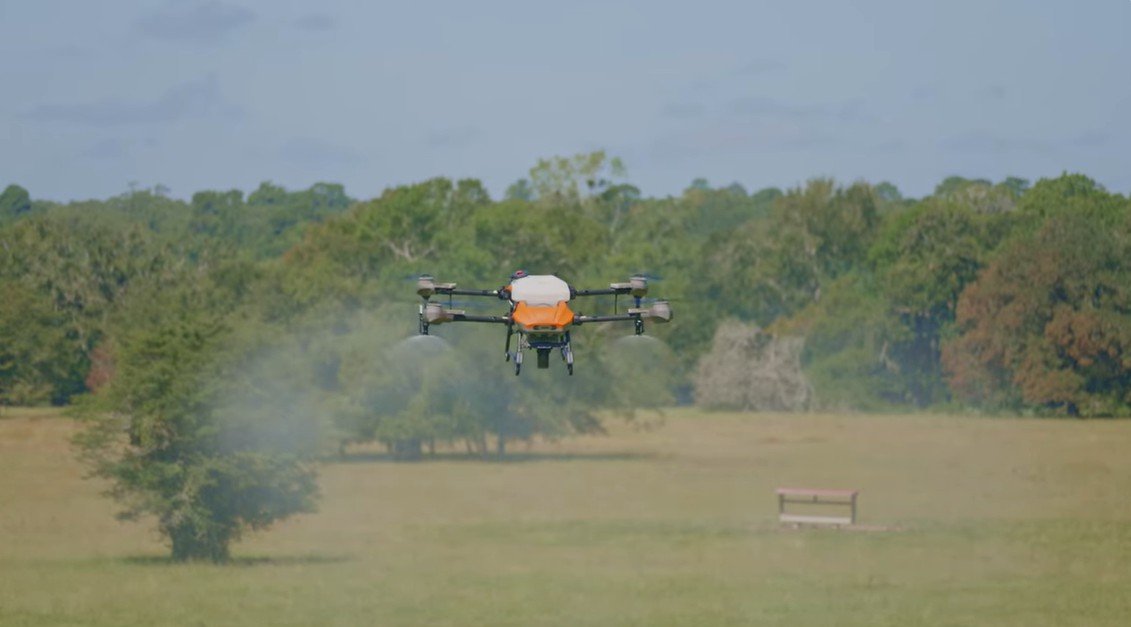
    Using drones in agriculture is a five-part workflow, not merely a single flight: planning plots before the growing season begins; identifying areas requiring treatment through mapping and surveying; carrying out spraying and fertilisation in line with the crop growth cycle; and recording each operation so that decisions for the next season are based on records rather than memory. Only by treating drones as a systematic part of the farm can their full value be realised; farms that view them as mere gadgets will, for the most part, only end up taking a few photographs.

    Step 1: Plan your farm before the growing season begins

    All subsequent work depends on a comprehensive field block map. Divide the farm into individual field blocks based on crop type, sowing dates, terrain and access conditions, and mark on each block the refuelling points and take-off points, water sources, obstacles and neighbouring sensitive areas (houses, watercourses, other crops). Most modern agricultural drones can automatically generate this map during their maiden flight. Once the map is established, every operation for the season will be planned according to it, rather than having to improvise in the field. During this planning stage, you will also need to decide which plots are suitable for drone operations: small, damp, terraced or scattered plots are generally suitable, whilst large, single, flat fields may still require the use of ground-based spraying equipment.

    Step 2: Surveying and inspection prior to application

    A single camera flight over a field can answer the key questions underlying every application decision: where exactly is the problem? And how much of the field is actually affected? Conducting survey flights after crop emergence, following storms, and during growth stages when pests or diseases appear allows you to treat specific areas of the field (or parts thereof) based on actual evidence, rather than applying a uniform treatment across the entire farm simply according to a calendar schedule. Even a simple visual survey can make a significant difference to economic performance: pesticides are applied precisely to areas under high pest or disease pressure, whilst the survey records serve as the basis for evaluating the effectiveness of the control measures. (Professional mapping and multispectral analysis are separate disciplines with their own specialised aircraft; the key point of this workflow is that, in a well-managed programme, the survey should precede spraying, regardless of who operates the camera.)

    Step 3: Spraying in accordance with the crop growth plan

    Spraying is the primary task on most farms, and its scheduling depends on the crop’s growth cycle rather than the operator’s convenience: the application window, the crop’s growth stage and weather conditions collectively determine the specific operation dates. Regarding operational procedures—spray rates, flight altitude, nozzle selection, calibration and battery rotation—we have provided an in-depth explanation in our dedicated ‘Guide to Drone Pesticide Spraying’; integration is key throughout the entire farm workflow. Spraying missions are planned based on the field maps created in Step 1 and triggered by the field surveys conducted in Step 2. During flight operations, refuelling and charging points are set up for the entire field in one go, rather than being adjusted ad hoc for each individual flight.

    Step 4: Broadcasting using the same system

    The same aircraft and the same block planning system can be used for operations involving granular materials: fertiliser, cover crop seeds and granular products are broadcast via the broadcast hopper (our FP800 is equipped with a 120-litre broadcast hopper, designed specifically for this purpose). Spreading operations follow the same process as spraying—block planning, calibrating application rates, and recording operational data—and this capability often comes as a pleasant surprise to new aircraft owners, as mid-season top-dressing and cover crop sowing on existing crops are tasks that ground-based equipment struggles with or is simply unable to perform.

    Step 5: Log every job, then use the log

    Workflow stage What happens What it feeds
    Planning Field map, refuelling points, access and sensitive areas recorded Every job in the season
    Mapping and surveying Camera passes at key growth stages Treatment decisions: where, when, how much
    Spraying Scheduled applications from the field plan Crop protection record per field
    Spreading Fertiliser and seed through the spreader tank Nutrient and cover crop record
    Logging and review Flight logs, products, rates and results filed Next season’s planning and product choices

    Flight logs, product names, rates and dates per field are not paperwork for its own sake. They are what make the second season better than the first: which fields needed retreatment, where the pressure started, what the programme actually cost per hectare. In most jurisdictions, they are also your compliance record. A drone programme that ends the season with a complete log has produced a farm asset, not just a treated crop.

    Frequently Asked Questions

    What are drones used for on a farm, in order of importance?

    For most farms, the order is: first, the spraying of plant protection products (the workload that pays for the machine); second, the distribution of fertilisers and cover crop seeds; and third, surveying/mapping as a decision-making layer that guides the first two. This page covers the entire workflow; the spraying technique itself is detailed in our crop spraying guide.

    Do I need a mapping drone as well as a spraying drone?

    To begin with, no. The cameras and field maps provided by the spraying drone itself cover the basic surveying needs for most farms. Specialised mapping drones and multispectral sensors justify their cost in larger operations with formal agronomic programmes. Build the spraying and spreading workflow first; add mapping when the decisions it informs are worth more than the drone itself.

    How long does it take to integrate the use of drones into the day-to-day running of a farm?

    The planning phase — plot maps, refuelling points, list of products — takes several days’ work before the season begins, and the first plots treated usually establish the routine right from the first few applications. What takes a whole season is the record-keeping: the data that makes the second year efficient only exists once the first year has been completed and the records have been filed.

    What is the difference between this guide and your crop spraying guide?

    This page covers the entire farm system: planning, surveying, spraying, spreading and record-keeping. The crop spraying guide focuses on the specific operational details of the spraying phase — calibration, dosage, nozzles and daily routine. Read this one for the structure and that one for the technique.

    Ready to organise your workflow around a machine? Compare models in the agricultural drone price guide, look at the FP800 and HD580 for spray-and-spread capacity, then message us on WhatsApp or use the request a quote form with your crops and hectares.

  • EAVision J150 Price: Package Price and Comparison Guide

    EAVision J150 Price: Package Price and Comparison Guide

    EAVision J150 Price: Package Price and Comparison Guide

    The EAVision J150 is sold in the US through a dealer network, with an officially announced base package price of $40,495 — the package includes the drone, remote control, three batteries, a charger and a set of four nozzles. This is a genuine and verifiable price for a large professional spraying drone. However, this price does not cover the full operational costs, nor does it indicate the export price for models with comparable tank capacities when sold directly from the factory. This page will cover both aspects.

    What is the J150?

    The EAVision drone J150 is the larger of the two agricultural models currently offered by EAVision (the J100 is its smaller counterpart), manufactured by EAVision, a Chinese manufacturer of agricultural robots based in Suzhou. It is a heavy-duty professional machine: US listings describe a 20-gallon spray tank (approximately 75 litres), an auger-fed spreader rated at around 180 lb / 100 litres, a maximum take-off weight of approximately 149 kilograms, and a 45,000 mAh battery system. The selling points highlighted in dealer material are terrain following, vision-based obstacle avoidance and a high spraying speed for broad-acre work.

    In terms of tank capacity, the J150 is in the same class as our HD580 (70-litre spray tank, 100-litre spreader tank) and just below the FP800 (80-litre spray tank, 120-litre spreader tank)—which is why buyers comparing the J150 usually enquire about quotes for those two models as well.

    What does $40,495 actually get you?

    Pricing in the US market is unusually consistent: listings from Agri Spray Drones, Controller.com and TractorHouse all show a price of $40,495 for the base package in November 2026. Before treating this as the machine’s running cost, please read the package contents:

    • Three batteries are merely the starting configuration. Whether three batteries are sufficient for your daily working area depends on your application rate and charging setup; for every large spraying drone, adding extra batteries in the first season is a common additional configuration.
    • The fertiliser spreader is an optional configuration, not a standard feature. Some product pages price the spreader version separately (one US retailer lists the spreader version at $43,495), so please confirm whether the quotation you receive includes granular application functionality.
    • This price is the US retail price. It includes US dealer stock costs, US after-sales support and US profit. EAVision has not published a standard global ex-works price, so buyers outside the US cannot know the actual price of the machine without the US channel costs included—this is the same structural problem faced by every dealer-sold brand on this website.
    Figure Contents Source
    $40,495 J150 starter set: drone + remote control, 3 batteries, charger, 4-nozzle set Agri Spray Drones (US distribution partner), November 2026
    $40,495 The same starter set, available from several distribution partners Controller.com / TractorHouse, November 2026
    $43,495 J150 with spreader configuration (one US retailer) US retail information, November 2026

    Comparison of factory-direct supply

    EAVision manufactures in China and sells overseas through distributors, so export buyers pay the factory cost plus the profit margin of a foreign distributor, freight and parts priced at retail prices. The alternative procurement structure is to purchase a machine of the same class directly from the factory: our HD580 is in the same class as the J150 (70-litre spraying, 100-litre spreading, figures from the manufacturer’s manual), whilst the FP800 is one class higher (80-litre spraying, 120-litre spreading). Both are quoted ex-works as complete working configurations—the batteries, charger and initial parts are itemised in the quotation before a deposit is paid, and parts are priced at factory prices for the entire service life of the machine, rather than at a foreign distributor’s retail price.

    Where the dealer route still has the advantage, to be honest: a good US EAVision dealer can provide local training, a repair bench and fast parts supply within the US. If you operate in the US, that network is genuinely valuable. Outside the US, you pay for it, but most of the services are unavailable to you.

    Questions to ask before paying for a J150

    Does this price include the sprayer, or is it for the sprayer body only? In US product listings, the two configurations are priced differently; please be sure to obtain written confirmation.

    How many batteries are included in the quotation, and how much does the next set cost? Three sets of batteries are usually required to start rotation; for any large machine, the second set of batteries is a budget item for the second quarter.

    Who is responsible for maintaining the aircraft in my country, and what is the parts price list? Distributor networks cover the whole country. If the reply mentions that the machine needs to be shipped overseas, please include the shipping cost in the comparison.

    Is this price the ex-works price, the price delivered to my port, or the US retail price? In cross-border procurement, the difference between these three prices is usually as much as several thousand US dollars.

    Frequently asked questions

    What is the price of the EAVision J150 in 2026?

    According to information on Agri Spray Drones, Controller.com and TractorHouse consulted in November 2026, US distributors list the base kit at $40,495—this kit includes the drone, remote control, three batteries, a charger and a 4-nozzle kit. The spreader configuration is priced higher (one retailer lists it at $43,495), and EAVision has not published a global ex-works price.

    How large is the J150’s spray tank?

    US distributor material states that the model is equipped with a 20-gallon (approximately 75-litre) spray tank and an auger-fed spreader with a capacity of approximately 100 litres / 180 lb, on an airframe with a maximum take-off weight of approximately 149 kg. Australian EAVision material states that the spray tank has a capacity of 70–75 litres (depending on the configuration), so please confirm the exact figure for the configuration in your quotation.

    Is the EAVision J150 a Chinese drone?

    Yes—EAVision is a Chinese manufacturer (based in Suzhou), the J150 is manufactured in China, and is sold overseas through a network of distributors. This is precisely why the procurement structure is so important: the same machine can reach you either at the retail price set by a foreign distributor, or at the factory export price when purchased directly from the manufacturer.

    What are the factory-direct alternatives to the J150 in its class?

    Our HD580 matches this class—with a 70-litre spray tank and a 100-litre spreader tank—whilst the FP800 (80-litre spray, 120-litre spreader) is a step up. Please send us details of your country, crops and number of hectares, and we will provide you with a written, itemised quotation tailored to your specific requirements, so that you can compare it item by item against the dealer package priced at $40,495.

    Would you like to compare the J150 with the manufacturer’s direct-sale model? Please refer to the full cost breakdown in our agricultural drone price guide, as well as the product pages for the HD580 and FP800. If you require a written quotation, please contact us via WhatsApp or complete the request a quote form.

  • NuWay Ag Drones: DJI Kits, T60X Pricing, and the Factory-Direct Alternative (2026)

    NuWay Ag Drones: DJI Kits, T60X Pricing, and the Factory-Direct Alternative (2026)

    NuWay Ag Drones: DJI Kits, T60X Pricing, and the Factory-Direct Alternative (2026)

    NuWay Ag is a US-based distributor of agricultural drones, headquartered in Dundee, Ohio, with a second site in Wichita, Kansas – an authorised DJI distributor and a DJI-certified service centre offering complete spray drone kits, trailers, as well as training and compliance services. For a US operator, it is precisely this full-service structure that is the decisive factor. For buyers outside the US, most of these costs are associated with a machine they will never bring back to Ohio – and this is exactly where an export offer direct from the factory should be included in the comparison.

    What NuWay Ag sells

    NuWay Ag operates as a distributor and service centre, not as a manufacturer. Its own FAQs clearly describe the product range: the company sells the drones that its own team flies – the DJI Agras T100, the DJI Agras T50, its own-brand model, the nuWay T60X, and the DJI FlyCart 100 – supplemented by a spare parts stock, factory-authorised repairs, spray trailers, a compliance service for US agricultural spraying licences and Part 137 certification, as well as a dealer programme for other sellers.

    This is the most comprehensive version of the US dealer model: hardware, trailers, training, paperwork support and a service workshop, all under one roof. It is also the clearest example of what the dealer margin is used for – an infrastructure based in Ohio and Kansas that serves US operators.

    How the pricing works

    NuWay Ag publishes prices for its kits, which is helpful – its DJI T50 generator kit, for example, is listed at $26,999 as a complete package with charging equipment and a cooling station. But look at the structure, not just the sticker price:

    • The kit is the starting point, not the operation. NuWay’s own 2026 trailer kits run from $31,999 to $44,999 on top of the aircraft. The batteries, generator, trailer and compliance support are where the real working budget is.
    • Compliance services are included in the price of the relationship. Licence guidance and programmes that allow applicators to spray under an existing Part 137 certificate are valuable in the US – and irrelevant to an operator working under the rules of another country.
    • The price includes the US distribution channel. Two retail locations, a certified service centre, training days and dealer margins are genuine value for a US buyer – and pure overhead on a machine that is being exported.

    None of this makes NuWay Ag a bad dealer – by US standards, it is a strong dealer. It simply means that its prices answer a different question from the one an export buyer is asking.

    Where a US dealer has the advantage – and where they don’t

    For a US farmer or end-user who wants a complete set on a trailer, personalised training on collection, a certified repair centre and assistance with complying with FAA regulations, NuWay Ag earns its margin. That is the honest case for the full-service dealer, and in the US this may well be the right choice.

    For buyers outside the US, the situation is reversed. You pay for the service centre in Ohio, the shop in Kansas and the compliance team – and then on top of that for international freight, whilst your spare parts are still charged at US retail prices. Direct import from the factory eliminates these costs: Our FP800 (80-litre spray tank, 120-litre spreader tank, 85 kg maximum payload) and HD580 (70-litre spray tank, 100-litre spreader tank) are offered ex-works as complete working configurations; the spare parts price list is provided in advance, with no US distribution costs included in the machine price.

    Purchase channel What you pay for Best suited for
    US dealers, such as NuWay Ag Machine plus import costs plus a mark-up for US kits, trailers, training, compliance and certified servicing US-based operators who value comprehensive on-site service
    Direct import ex-works, NAVIRO Machine plus freight to your port, itemised in one written quotation Buyers outside the US; dealers setting up their own local support

    Questions you should ask a dealer before paying

    Who manufactures this model and where are the spare parts dispatched from? A dealer’s own brand – such as the T60X – is fine, provided the manufacturer and the spare parts supply chain behind it are documented.

    What is included in the complete working kit, in writing? The aircraft, batteries, charger or generator, cooling system, trailer and starter parts, itemised – the price of the kit alone does not guarantee it will operate properly.

    What will the second season cost? Batteries and wear parts at retail prices, offered now rather than only after the first season.

    If I export the machine, what support will remain in place? Cover provided by the service centre and the warranty terms are national. Before making a deposit, ask for written confirmation of what will remain valid across borders.

    Frequently Asked Questions

    Does NuWay Ag manufacture its own drones?

    Generally not: the company is an authorised DJI dealer and certified service centre, whose product range consists of DJI Agras drones as well as its own-brand product, the ‘nuWay T60X’, which is sold under the same umbrella. The added value lies in the selection, the putting together of kits, training, support with regulatory compliance and repairs – services offered in addition to equipment from other manufacturers.

    How much does a complete NuWay Ag package cost?

    Individual packages are advertised – for example, the DJI T50 Generator package for $26,999 – but to be ready for operation, batteries, chargers and, as a rule, a trailer are also required, and NuWay’s trailer kits alone cost between $31,999 and $44,999. You should therefore compare the total cost of ownership, rather than just the aircraft package on its own.

    I operate outside the USA. Should I buy through NuWay Ag or directly ex-works?

    Ask both parties for a quotation including delivery to your port and a full bill of materials. US compliance services, training days and a repair workshop in Ohio lose most of their value as soon as the machine leaves the USA, whilst their costs remain included in the price. Export customers usually compare the dealer’s total price with a quote directly ex-works for the same tank class and make their decision on that basis.

    Which NAVIRO machine is comparable to the large DJI class sold by NuWay?

    In the heavy-duty class, our FP800 (80-litre spray tank, 120-litre spreader tank) is the direct equivalent; the HD580 covers the 70-litre spray class. Tell us your country, the crops you grow and the area under cultivation in hectares, and we will send you a detailed written quotation for the desired configuration.

    Would you like to compare a US dealer’s offer with a direct factory-direct option? Start with our price guide for agricultural drones and then take a look at the model pages for the FP800 and HD580. For a written quote, send us a message via WhatsApp or use the quote request form.

  • Agri Spray Drones: What They Sell, J150 Pricing, and the Factory-Direct Alternative (2026)

    Agri Spray Drones: What They Sell, J150 Pricing, and the Factory-Direct Alternative (2026)

    Agri Spray Drones: What They Sell, J150 Pricing, and the Factory-Direct Alternative (2026)

    Agri Spray Drones is a US-based agricultural drone retailer headquartered in Boonville, Missouri, best known as the leading US supplier of EAVision spray drones such as the J150, which are sold as complete packages including training and support. For an operator in the US, this service package is the actual product. For buyers outside the US, however, the cost of the same package largely consists of charges for services they cannot use – and this is precisely where an export offer direct from the factory comes into the comparison.

    What Agri Spray Drones sells

    Agri Spray Drones operates as a distributor and service provider, not as a manufacturer. Its product range is based on EAVision drones – primarily the J100 model and the larger J150 model – and is complemented by bespoke application solutions, operator training, advice on compliance with FAA regulations, and a spare parts and repair service. This combination is the essence of the company: it selects drones from EAVision, imports them, offers them as a complete package and provides after-sales support; its profit margin covers stock in the USA, workshops in the USA and on-site support – services that a domestic buyer actually utilises.

    The J150 is the flagship of the product range: a large, professional spraying drone with a 20-gallon spray tank (approx. 75 litres) and a screw conveyor spreader, designed for commercial users treating large areas. If your search began with agricultural spray drones, this machine and the support structure behind it are exactly what you’ll actually be offered.

    How pricing works

    Agri Spray Drones publishes a clear guide price: its basic J150 package – aircraft with remote control, three batteries, a charger and a 4-nozzle kit – is listed at $40,495. This is more transparent than many retailers, but three caveats still apply:

    • A package price can only be compared on the basis of its contents list. Three batteries may or may not be the right number for your daily area coverage; a spreader, extra batteries, a generator or a trailer change the real operating cost. Ask for the full itemised list behind any figure.
    • The price includes the US sales channel. US warehousing, a Missouri workshop, training days and the dealer’s margin are real added value within the US – and pure extra cost for a machine that will be exported and serviced elsewhere.
    • The service half of the offer does not travel with it. Help with compliance with FAA regulations, advice on US application licensing and a repair workshop in Missouri are worth little to an operator in Brazil, Thailand or Kenya. Calculate the hardware separately from the services before you compare.

    Where a US dealer has the advantage – and where it does not

    For a US user who needs a machine this month, training in English, support with the paperwork for Part 137 and a repair workshop that answers the telephone in their own time zone, Agri Spray Drones earns its margin. This is the honest case for buying through a strong regional dealer – and for US buyers it is often the right one.

    The calculation changes for buyers outside the US, who make up most of our readers. You pay the dealer’s mark-up, then you pay again to ship the machine from the US to your port, and your spare parts still come through a US shop priced for the US market. Direct import ex-works cuts out this middle step: our FP800 (80-litre spray tank, 120-litre spreader hopper, maximum payload 85 kg) and HD580 (70-litre spray tank, 100-litre spreader tank) are quoted ex-works as complete, ready-to-use configurations, with the spare parts price list shared before you commit and no dealer margin included in the machine price.

    Supply channel What you pay for Best suited for
    US dealers (e.g. Agri Spray Drones) Machine + import costs + mark-up for US stock, training, regulatory compliance support and repairs Users based in the US who value local service
    Direct import ex-works (NAVIRO) Machine + freight costs to your port, detailed in a written quotation Buyers outside the US; dealers setting up their own local support

    Questions you should ask any retailer before making a payment

    Who manufactures this model and where are the spare parts dispatched from? A retailer’s own brand is fine – provided the spare parts supply chain behind it is documented and priced.

    What exactly is included in the package, as specified in writing? The aircraft, number of batteries, charger, generator, spreader and spare parts, listed individually.

    What will the second season cost? Batteries and wear parts at the dealer’s prices, which are stated now – and not only discovered in the thirteenth month.

    If I export this machine, what support will I still receive? Warranty conditions vary across borders. Obtain the answer in writing before making the deposit, not only after the machine has arrived.

    Frequently asked questions

    Does Agri Spray Drones manufacture its own drones?

    No. It is a retailer and service provider whose product range is based on EAVision aircraft, primarily the J100 and J150 models. That is a normal and workable model – what matters is that the manufacturer, the spare parts supply and the support structure behind the badge are clearly documented before you buy.

    What does the EAVision J150 package cost at Agri Spray Drones?

    Its published basic package costs $40,495 and includes the aircraft with remote control, three batteries, a charger and a 4-nozzle kit. Regard this as the starting configuration: sprayers, additional batteries and field equipment are charged separately, so compare complete working quotations rather than headline packages.

    I run a farm outside the US. Should I buy through a US dealer or directly from the manufacturer?

    Ask both parties for a quotation including delivery to your port and a full parts list. The training, regulatory compliance support and local repair workshop provided by a US dealer lose most of their value as soon as the machine leaves the US, whilst the price premium remains. That is why export buyers usually compare the dealer’s quotation with a direct ex-works quotation for the same tank class before making a decision.

    Which NAVIRO machine is comparable to the J150 class?

    In the large class, the FP800 (80-litre spray tank, 120-litre spreader tank) is the direct equivalent; the HD580 covers the 70-litre spray class. Let us know your country, your crops and your number of hectares, and we will draw up a written quotation for the working configuration, itemised line by line.

    Are you comparing a US retailer with an option to buy directly from the manufacturer? Start with our agricultural drone price guide, then take a look at the FP800 and HD580 model pages. For a written quote, contact us via WhatsApp or use the request a quote form.

  • DJI Agras T25 Price in 2026: $12,500, €9,618 or $19,895 Ready to Fly?

    DJI Agras T25 Price in 2026: $12,500, €9,618 or $19,895 Ready to Fly?

    DJI Agras T25 Price in 2026: $12,500, €9,618 or $19,895 Ready to Fly?

    Price of the DJI Agras T25: the small Agras with three very different prices

    The DJI Agras T25 is the most compact model in the Agras range, and its price depends on which side of the tariff line it is purchased on. Its recommended retail price in the US before tariffs was approximately $12,500. A European DJI Gold reseller is offering it at €9,618, including VAT, with the aircraft, remote controller, first battery and standard charger all included in the price. In the US, following the imposition of tariffs, a T25 with a remote controller is priced at $12,999.99 at one reseller; retail prices for this category are expected to range between $16,000 and $20,000, whilst a ready-to-fly T25P kit is priced at $19,895. All these figures are taken from retailer listings and industry directories consulted in November 2026.

    This page explains what each technical specification of the T25 entails, what the T25 actually is, and the question that buyers of compact drones must answer honestly before making a purchase: whether a 20-litre machine suits their needs or whether, in reality, the job requires a 40-litre class model.

    What is the DJI Agras T25?

    The T25 is DJI’s compact agricultural drone: a 20-litre spray tank with a rated capacity of 20 kg, a spreading system with a 35-litre hopper carrying 25 kg, a spray flow rate of 16 l/min with two nozzles and 24 l/min with four, all housed in a lightweight, foldable airframe that a single person can operate and transport in a van. It is designed for individual operators, small farms, orchards and vineyards — the market segment where the larger Agras models offer more capabilities than the fields actually require.

    This positioning is genuine, and it is also why one must be careful about the price: in this category, the difference between the price of the aircraft and that of the operating system accounts for the lion’s share of the actual cost.

    Why does the price of the T25 vary so much?

    DJI does not publish a single global price. The T25 is sold through authorised distributors, and regional prices now vary significantly: the same model costs €9,618 (including VAT) in Italy, whilst US buyers face post-tariff distributor prices ranging from $16,000 to $20,000. Neither figure is ‘incorrect’; these are different markets, with different tax treatments and different stock levels.

    The base price is not the working price. The European technical data sheet is unusually transparent on this point: it includes the aircraft, the controller, the first battery and the standard charger; additional batteries and the spraying system are charged for separately. A 20-litre sprayer operating for a full day requires a battery change, so the second and third batteries are not merely accessories, but rather make the difference between a demonstration and a working programme.

    Tariffs have divided the market. The pre-tariff RRP of $12,500 reflects a previous import context. US distributor prices now include tariff costs that are not shown in European quotes, so copying a price from a website on another continent and adding it to your budget is a sure-fire way to get it wrong.

    Compact drones are being compared to the wrong category. A ready-to-fly T25 at $19,895 is close to the ‘aircraft only’ prices of larger models. That does not make the larger model cheaper; rather, it renders the comparison meaningless until both are assessed as complete, operational systems.

    If your application volume exceeds 20 litres: the 40-litre class

    NAVIRO does not offer a compact 20-litre model; our range starts with the 40-litre class, and we prefer to be completely open about this rather than pretending otherwise. If your cultivated area, your refuelling routes or your ambitions as a contractor exceed what a 20-litre tank can cover in a day, the machine you should be comparing it to is the HD540S: a 40-litre spray tank, a 60-litre spreader tank, a flow rate of 18 L/min with two nozzles and 24 L/min with four nozzles, a working width of 10 metres, a 2,100 Wh battery and an 8,500 W charger, offered directly from the factory as a complete configuration. If the 20-litre range is indeed the right size for a sole operator, then the T25 class is a sensible purchase – at a verified total price.

    Comparison DJI Agras T25 (retail channel) NAVIRO HD540S (direct export ex-works)
    Spray tank 20 L 40 L
    Spreader 25 kg / 35 L tank (optional in some offers) 60 L tank
    Price details €9,618 incl. VAT (EU, first battery included); ~$12,500 RRP before customs duties; $19,895 RTF kit A written quotation for the complete operational configuration
    Batteries and charger First battery included in some offers; additional batteries available at extra cost Detailed in the quotation prior to the deposit
    Best suited for Sole traders, small, densely planted fields farms and contractors whose requirements exceed 20 litres per day
    Price transparency Depends on dealer, region and customs duties Price quoted per order; configuration specified in writing

    The honest summary: buy the class that the project requires, then compare the full prices within that class. A compact drone purchased at a verified full price outperforms a larger drone purchased at a headline price that does not include the batteries – and the opposite is equally true.

    Questions to ask before paying a T25 price

    What exactly is included in this price? Aircraft, remote control, how many batteries, which charger, and whether the spraying system is included. On compact models, the money is in the extras – ask for the written list.

    How many batteries does my working day need? Match the rotation to your number of hectares and your refuelling plan, then calculate the price for that rotation. A quote with just one battery is a starting point, not a work programme.

    In which tariff and tax world does this price apply? US and EU prices for the T25 currently differ by thousands for purely regulatory reasons. Check that the figure applies to your market, delivered and legal to operate.

    Who services it locally, and what do spare parts cost? Ask for the spare parts price list. Compact drones work hard for their size; pumps, nozzles and batteries determine the cost of the second season.

    Frequently asked questions

    How much will the DJI Agras T25 cost in 2026? Verified figures, checked in November 2026: €9,618 including VAT from a European DJI Gold dealer (aircraft, remote control, first battery and standard charger included); a pre-tariff US RRP of roughly $12,500; an expected post-tariff US retailer’s mark-up of $16,000–$20,000; and a ready-to-fly T25P kit at $19,895. Which figure applies to you depends on the market, the package and the delivery terms.

    Is the T25 big enough for a working farm? For sole operators, small farms, orchards and vineyards, yes – that is what it was designed for. The limit is daily coverage: a 20-litre tank means frequent refuelling, so once the operation grows, refuelling and battery rotation – not flight time – becomes the limiting factor.

    What is the alternative to an Agras T25? Within the compact class, compare other 20-litre machines based on verified total costs. If your number of hectares exceeds the class, our HD540S is the next step at 40 litres, factory-direct; the wider Agras range is listed on the DJI agricultural drones page.

    Why is the US price so much higher than the European one? Tariffs. The European price applies in a market without the current US import tariffs on Chinese-built drones, and it includes VAT. Comparing the two figures without the tax and tariff basis is the most common mistake when pricing the T25.

    Speak to the Export Team

    Tell us your country, crop and number of hectares, and we will provide you with a written quote for the complete working configuration – aircraft, batteries, chargers and a starter parts kit – and we will tell you openly if the 40-litre class is more than your programme needs. Message us on WhatsApp +86 177 5122 0949 or use the Request a Quote form. You can find the full cost breakdown behind these prices in our Agricultural Drone Price Guide.

  • Talos T60X Drone Price in 2026: $8,999 Buys the Drone Only — Read the Bundle List

    Talos T60X Drone Price in 2026: $8,999 Buys the Drone Only — Read the Bundle List

    Talos T60X Drone Price in 2026: $8,999 Buys the Drone Only — Read the Bundle List

    Talos T60X Pricing: $8,999, $16,999 or $19,800 — Depending on What Is Included in the Box

    The Talos T60X is advertised from $8,999, and that figure is genuine — it is Talos’s own shop price for the drone with a remote controller and nothing else. The same shop prices the T60X with three batteries and a charger at $16,999, and with three batteries and a generator at $19,800. Dealer listings agree on the structure: NuWay Ag lists the $8,999 tier with the words “Drone & Remote Only” attached. So the T60X does not have a pricing mystery; it has a packaging ladder, and the rung you are on determines what you can actually spray.

    This page explains what the T60X is, what each price tier includes, and the comparison that export buyers should make before paying dealer bundle prices: the same class of machine bought direct from the factory, quoted as a complete package in a single figure.

    What is the Talos T60X?

    First, a clarification the search results need: there is no DJI Agras T60. The T60X is the in-house model of Talos Drones, a US dealer — which is why searches for ‘DJI T60X’ lead to Talos pages. Dealer specifications describe a 50-litre spray tank, upgradeable to 60 litres, with three-camera navigation, obstacle avoidance and terrain following. It is positioned as a high-capacity, budget-entry sprayer for the US market, and its $8,999 entry tier is the headline that made its name.

    The positioning of the machine is understandable. What matters for a buyer is that Talos is a dealer brand: the T60X is sold, bundled and supported through the US dealer channel, and its pricing follows dealer logic rather than a factory list.

    Why Does the Price of the T60X Range from $8,999 to Almost $20,000?

    The $8,999 tier is an airframe-only price. Drone and remote controller. No batteries sufficient to work a day, no charger, no generator. Every dealer listing that shows this figure either says so in the bundle name or in the small print — ‘Drone & Remote Only’ is the honest version of it.

    The price for a configuration ready for actual use is approximately double that amount. Adding three batteries and a charger takes the same shop’s price to $16,999; swapping in a generator bundle takes it to $19,800. That is not upselling — a 50-litre sprayer cycles batteries constantly, and the power system is part of the machine. But it means the number that draws buyers in is about half the number that puts the drone to work.

    Dealer bundles are not standardised. Different US dealers assemble different ‘all-weather’ and ‘fly all day’ packages around the same aircraft, with different battery counts, chargers, cooling stations and training inclusions, at different prices. Two quotes for ‘a T60X package’ can differ by thousands while both are accurately described.

    Support is priced inside the channel. A US dealer’s margin carries local stock, training and a phone number in your time zone. For a US farm that value is real. For a buyer outside the US, the calculus changes: you pay the dealer margin, then pay again to export the machine from the US, and the local-support value stays behind when the machine leaves.

    The Same Class of Machine, Direct from the Factory

    Buyers cross-shopping the T60X are usually sizing a 50–70 litre programme. NAVIRO’s machine in that class is the HD580: a 70-litre spray tank and a 100-litre spreader tank (figures from the supplier’s manual), quoted factory-direct for export as one complete working configuration — aircraft, batteries, charger and starter parts itemised in writing before a deposit is paid. If the programme is smaller, the HD540S covers the 40-litre class with a 40-litre spray tank and 60-litre spreader tank. Our full comparison of the Talos channel is on the Talos Drone Alternatives page.

    Comparison Talos T60X (US dealer channel) NAVIRO HD580 (factory-direct export)
    Spray tank 50 L (upgradeable to 60 L) 70 L
    Spreader tank Depends on the dealer package 100 L
    Price evidence $8,999 for the drone and remote control only; $16,999 with three batteries and a charger; $19,800 with a generator package A single written quotation for the complete working configuration
    Batteries and charging Determined by the dealer package tier Itemised in the quotation before the deposit is paid
    Support model US dealer network, with the cost included in the package Direct contact with the export team, with parts shipped directly from the production line
    Best fit US buyers who value local dealer support Export buyers and dealers building their own local support

    The point made by the table is the same one this page makes about the T60X itself: never compare a drone-only tier with a working-configuration quote. Price both machines as complete setups, delivered to your operation, and then decide which channel earns its margin.

    Questions to Ask Before Paying Any Price for the T60X

    Which tier is this quote for? Drone and remote, battery bundle or generator bundle — and what exactly is in it, item by item, in writing.

    How many batteries are there, and what do spares cost? On a 50-litre machine, battery rotation is the working day. Ask the price of one additional battery and one pump now, not after the season starts.

    What support is available if I use the drone outside the US? Warranty terms, parts shipping and technical support across borders — get the answer in writing before the deposit, because the dealer’s local value is the part of the price you may not be able to use.

    Is the spreading system included? Spray and spread are different assemblies. Confirm which one the quoted tier carries if your programme includes granular work.

    Frequently Asked Questions

    How much does the Talos T60X cost in 2026? According to Talos’s own shop, checked in November 2026: $8,999 for the drone with remote controller, $16,999 with three batteries and a charger, and $19,800 with three batteries and a generator bundle. Dealer-assembled packages vary around those tiers.

    Is the T60X a DJI drone? No. The T60X is a proprietary model from Talos Drones, sold through its US distributor network; there is no T60 model in DJI’s Agras series. Search results referring to the T60X as the ‘DJI T60X’ are confusing the two brands—the DJI agricultural drones page lists the actual Agras series products.

    Is the T60X, at $8,999, good value for money? The price of the aircraft itself is competitive. However, when it comes to the budget for a spraying programme, this figure is only about half the actual cost once you factor in batteries and charging. Compare it with the total cost of ownership of other machines, rather than their list prices.

    What are the alternatives to the T60X? Any model in the 50–70 litre class quoted as a complete operational package. Our HD580 covers this class via direct factory sales; for a detailed comparison of distribution channels, see the Talos drone alternatives page.

    Contact the Export Team

    Please let us know your country, crop type, and number of hectares, and we will provide you with a complete written quote for your operation—including the aircraft, batteries, chargers, and starter accessory kit—so you can compare it item by item with any dealer’s package. Please contact us via WhatsApp +86 177 5122 0949, or use the Request a Quote form. For a complete breakdown of the costs behind dealer pricing, please refer to our Agricultural Drone Price Guide.

  • DJI Agras T30 Price in 2026: $9,999, $13,999 or a $22,679 Kit? Check What Is Included

    DJI Agras T30 Price in 2026: $9,999, $13,999 or a $22,679 Kit? Check What Is Included

    DJI Agras T30 Price in 2026: $9,999, $13,999 or a $22,679 Kit? Check What Is Included

    Price of the DJI Agras T30: the same drone for $9,999, $13,999 and $22,679

    The DJI Agras T30 does not have a single price. Maverick, an authorised US distributor, offers the drone for $9,999 compared to a list price of $14,999. AgriSpray Drones, another US distributor, offers it for $13,999. A ready-to-fly T30 kit — comprising the drone, batteries and charger, packaged so it is operational straight out of the box — is priced at $22,679. These three figures are taken from current listings by the distributors consulted in November 2026, and the difference between the lowest and highest prices is not a mistake: each price corresponds to a different amount of equipment.

    This page explains what each T30 price actually includes, what the T30 is, and the comparison most export buyers ultimately make: upgrading to a 40-litre machine purchased directly from the manufacturer, where the budget covers the complete working configuration in a single written figure.

    What is the DJI Agras T30?

    The T30 is DJI’s agricultural drone in the 30-litre class from the generation before the T40: a 30-litre spray tank, a spreading system capable of a 40 kg payload, a spherical radar system and IP67 protection. It uses a transformable, foldable design that made it popular with operators who travel from farm to farm by truck. In the current Agras range it sits below the T40, T50 and T100, and DJI no longer positions it as a front-line model – which is exactly why its prices behave the way they do.

    It is still a capable, proven sprayer. The reason why the search term ‘DJI Agras T30 price’ is searched so heavily is that the figure associated with it depends entirely on which listing you end up on.

    Why does the price of the T30 vary so much?

    DJI does not publish a single global price. DJI agricultural models are sold through authorised dealers, and each dealer sets prices based on unit allocation, shipping, duties and their profit margin. It is entirely legitimate for two authorised dealers in the same country to have a difference of $4,000 in the price of the same aircraft – as shown by the US list prices of $9,999 and $13,999 above.

    ‘Drone only’ and ‘ready to fly’ are different products. The lowest headline prices buy the drone, sometimes with a remote controller and little else. The batteries, charger and charging station that a 30-litre sprayer uses during a working day are separate items. The $22,679 kit exists precisely because the drone-only price is not a working price.

    It is a previous-generation model, so stock is what decides. With the T40 and T50 above it, the price of the T30 increasingly reflects what a dealer has in stock. A sharp price can be genuine clearance – or a unit whose batteries have been sitting in storage. For a model of this age, the battery manufacture dates matter more than the discount.

    Export offers are not delivered prices. T30 offers on cross-border B2B platforms are ex-works starting prices for traders. Freight, insurance, import duty, local tax, registration and warranty handling sit on top, and after-sales support across a border is the buyer’s problem unless a contract says otherwise.

    A class above, straight from the factory: the decisive comparison

    NAVIRO does not offer a 30-litre model; our range starts with the 40-litre class, which is what most prospective buyers of the T30 opt for once they compare the cost per hectare. The HD540S features a 40-litre spray tank and a 60-litre spreader hopper, a flow rate of 18 L/min with two nozzles and 24 L/min with four nozzles, a working width of 10 metres, a 2,100 Wh battery and an 8,500 W charger. If requirements exceed those of this class, the HD580 offers a 70-litre spray tank and a 100-litre spreader tank (specifications taken from the manufacturer’s manual).

    Comparison DJI Agras T30 (dealer network) NAVIRO HD540S (factory-direct export)
    Spray tank 30 L 40 L
    Spreader System with 40 kg payload 60 L tank
    US price evidence $9,999–$13,999 for aircraft; $22,679 for RTF kit One written quote for the complete working configuration
    Batteries and charger Varies depending on the dealer package Detailed in the quote before the deposit is paid
    Spare parts Authorised dealer network Despatched directly from the production line
    Price transparency Dependent on the dealer and stock levels Quoted per order, configuration fixed in writing

    The point of this table is not that a larger tank is automatically better. Rather, it is that a T30 headline price and a factory-direct quotation are two different kinds of figures: one is a starting point within a dealer package that you still have to decode, the other is the full configuration stated up front. Compare like with like – a fully working set-up against a fully working set-up.

    Questions you should ask before paying for the T30

    What exactly is included in this price? The aircraft, how many batteries, which charger or charging station, whether or not a generator is included, and whether or not spare nozzles and pumps are included. Ask for a written list.

    How old are the batteries? For a previous-generation model, this is the hidden variable. Batteries that have aged in a warehouse can wipe out the saving on a discounted unit within a season.

    Who services the aircraft in my country, and how much do parts cost? Ask for the parts price list – a pump, a motor and a battery will tell you more about the cost of ownership than the price of the aircraft.

    Is this a delivered price or an ex-works price? If the quote crosses a border, freight and duty commonly add 20–40 per cent. Make the seller state which basis the price is on.

    Frequently Asked Questions

    What does the DJI Agras T30 cost in 2026? Verified US dealer listings checked in November 2026 range from $9,999 for an aircraft listing at an authorised dealer to $13,999 at another dealer, with a ready-to-fly kit at $22,679. What you pay depends on the package, the dealer’s stock position and the delivery terms.

    Is the T30 still worth buying now that the T40 and T50 exist? For a smaller operation, it can be – at the right price and with batteries in good condition – it is a proven 30-litre machine. Check the age of the batteries and the availability of parts first; on an older model, these two factors determine whether a discount is genuine.

    What is the alternative to an Agras T30? Any machine in the 30–40-litre class with published flow rates and a written specification for the battery and charger. Buyers moving up to the 40-litre class should compare our HD540S; compare the quote for the full configuration with the price of a ready-to-fly T30 kit, rather than with the quote for a single aircraft.

    Can I import a T30 myself using a B2B quote? Yes – dealers do this routinely. In addition to the quoted price, factor in freight, customs duties, taxes and registration, and bear in mind that the warranty and spare parts will then be handled by the respective seller. Most professional operators end up paying for a distribution channel that takes responsibility for the aircraft during the season.

    Get in touch with the export team

    Let us know your country, the crop you grow and the area under cultivation in hectares, and we will provide you with a written quote for the complete set of equipment – drone, batteries, chargers and a starter spare parts kit. Send us a message via WhatsApp +86 177 5122 0949 or use the Request a Quote form. You can find information on the prices of the entire Agras product range under DJI Agricultural Drones, and a full breakdown of these prices can be found in our Agricultural Drone Price Guide.

  • DJI Agras T70P Price in 2026: Why Quotes Range from €6,710 to $53,999

    DJI Agras T70P Price in 2026: Why Quotes Range from €6,710 to $53,999

    DJI Agras T70P Price in 2026: Why Quotes Range from €6,710 to $53,999

    The price of the DJI Agras T70P: one drone, four continents, four very different figures

    There is no standard global market price for the DJI Agras T70P, and the price range is wider than for any other current Agras model. A listing in the US shows a price of $53,999 (currently sold out). A Canadian retailer’s ‘Ready-to-Spray’ package costs CAD $35,705. An Australian dealer quotes A$20,380. A Greek dealer lists €6,710 excluding VAT – with batteries and charger charged separately. These are all genuine dealer quotes, verified in November 2026. None of these prices corresponds to the price of a ready-to-use T70P delivered directly to your farm.

    This page explains what the T70P is, why the quoted prices vary so widely, and what comparison buyers in the export market should make within the 70-litre class before paying any of these prices: the same tank capacity, purchased directly from the manufacturer and offered as a complete configuration.

    What is the DJI Agras T70P?

    The T70P is DJI’s 70-litre-class agricultural drone, positioned between the T50 generation and the flagship T100. The specifications provided by retailers are consistent on the key points: a 70-litre spray tank, a 100-litre spreader tank with a rated load of 70 kg, a spray rate of 30 L/min as standard and 40 L/min with the optional four-nozzle configuration, a payload capacity of 65 kg, and DJI’s ‘Safety System 3.0’ sensor suite. It sprays, spreads and lifts using a single flight frame and is aimed at medium-sized farms, orchards and service providers.

    This is a serious machine in a popular class – which is why the associated price confusion is significant. In the 70-litre class, the cost-effectiveness per hectare becomes particularly attractive, and a misinterpreted quote can lead to a five-figure error.

    Why does the price of the T70P vary so much?

    DJI does not publish a standard global price. The Agras range is sold through authorised dealers, who calculate their prices based on allocation, freight costs, customs duties and their own margin. For a newer model with limited availability such as the T70P, regional differences are extreme – the offers listed above range from the equivalent of approximately $7,000 to $54,000, before any of them represent a delivered, ready-to-use price.

    The cheapest quotes do not include complete machines. The Greek quote, which marks the lower end of the price range, explicitly states that batteries and the charger are separate items. For a 70-litre drone that is in operation all day, battery rotation and the charging infrastructure account for a significant proportion of the system costs. Comparing this amount with the price of a ‘ready-to-spray’ package means comparing two different products.

    “Ready-to-spray” packs contain different components. The Canadian pack, priced at CAD $35,705, is described as a ready-to-use set; with the offers from the USA and Australia, it varies as to whether the spray system, the batteries and the charger are included in the stated price or are added at the checkout. A reliable comparison is only possible on the basis of a written, detailed breakdown from each individual supplier.

    Customs duties and import routes affect the price depending on the country. The same T70P model is subject to different customs and tax regulations whenever it crosses a border, and with grey imports, the obligations of the authorised distribution channel do not apply. An offer that seems impossibly cheap usually hides the price difference in the freight costs, customs duties or a lack of support.

    The 70-litre class, direct from the factory

    The T70P’s tank capacity is exactly the same as that of our HD580: a 70-litre spray tank and a 100-litre spreader hopper (figures taken from the manufacturer’s manual). The difference lies in what is included in the scope of delivery. The HD580 is offered ex-works for export as a complete operating kit – the aircraft, batteries, charger and launch components are listed in writing before a deposit is paid. If your operational requirements exceed the 70-litre class, the FP800 offers an 80-litre spray tank, a 120-litre spreader tank and a maximum payload of 85 kg.

    Comparison DJI Agras T70P (retail) NAVIRO HD580 (direct sales ex-works)
    Spray tank 70 L 70 L
    Spreader tank 100 L (70 kg) 100 L
    Price quote for the USA $53,999 (sold out); CAD $35,705 package, ready for spraying in Canada A written quotation for the complete operating equipment
    Batteries and charger Separate items in low headline listings Itemised in the quotation before the deposit
    Spare parts Authorised dealer network, prices vary by dealer Shipping from the production line
    Price transparency Varies depending on region, stock and import route Quoted per order, configuration fixed in writing

    Nothing in the table suggests that the retailer channel is the wrong choice – a strong local retailer earns its margin during the peak season. The point is more specific: in the 70-litre class, you should never compare one supplier’s pure aircraft costs with the cost of a complete package from another supplier. Either the price for the T70P is quoted as a complete package, or the aircraft delivered directly from the factory is priced in the same way.

    Questions to ask before paying for a T70P

    What exactly is included in this price? The aircraft itself, how many batteries, which charger, whether the spray system is included or not, and whether spare nozzles and pumps are included or not. A written list, not a verbal summary.

    Is this a unit from the authorised distribution channel for my country? Ask how the unit is entering your market and who is providing the warranty locally. For a model with such significant regional price differences, the import route is part of the product.

    Who carries out maintenance work in my area, and how much do spare parts cost? Request the spare parts price list – pumps, engines and a battery give a better indication of running costs than the purchase price of the aircraft.

    Is the price quoted on a delivered or ex-works basis? For cross-border deliveries, an additional 20–40 per cent is typically added for freight, customs duties and taxes. Ask the seller to specify the price basis in the quotation.

    Frequently Asked Questions

    How much will the DJI Agras T70P cost in 2026? Verified dealer quotes, checked in November 2026, include $53,999 in the US (sold out), CAD $35,705 for a ready-to-spray package in Canada, A$20,380 in Australia and €6,710 excluding VAT in Greece, with batteries and chargers sold separately. Your actual price will depend on the configuration, the sales channel and the delivery terms – there is no standard price.

    Is the T70P worth it compared to the T50 or T40? It is a newer, larger platform: 70 litres versus 40 litres, with spreading and lifting on the same airframe. Whether the upgrade pays off depends on your daily output in hectares and your refilling logistics; above a certain area, the tank class stops being the limiting factor and the batteries become the limiting factor.

    What is the alternative to an Agras T70P? A machine in the same 70-litre class with a written quote for the complete configuration. Our HD580 matches the T70P’s 70 L / 100 L tank class and is sold factory-direct; compare its complete quote against a T70P working package, not against a listing for the aircraft alone. The wider product-range context can be found on our DJI agricultural drones page.

    Can I buy the cheap European listing and ship it home? You can, and retailers do this. Add on freight, customs duties, taxes and registration, clarify the warranty position in your country, and factor in the batteries and charger, which are not included in the listing. The price difference narrows quickly once the machine is complete and can be operated legally.

    Get in touch with the export team

    Let us know your country, the crop you grow and the area under cultivation in hectares, and we will provide you with a written quote for the complete set of equipment – drone, batteries, chargers and a starter spare parts kit. Send us a message via WhatsApp +86 177 5122 0949 or use the Request a Quote form. You can find a full breakdown of these costs in our Agricultural Drone Price Guide.

  • Talos Drones: What They Sell, What It Costs, and the Factory-Direct Alternative (2026)

    Talos Drones: What They Sell, What It Costs, and the Factory-Direct Alternative (2026)

    Talos Drones: what they sell, how much it costs and how to compare

    Talos Drones is a US-based distributor of agricultural drones, and if you’re involved in farming in the US, it’s easy to see its appeal: stock in the US, technical support in the US and a homepage highlighting a basic model priced at $8,999. Users who visit the site are usually looking for one of three things: what Talos actually sells, how much a Talos kit really costs once it’s ready to fly, or whether there’s a better deal for buyers outside the US. This page answers all three questions honestly, including the areas where Talos really stands out.

    What Talos sells

    Talos operates as a distributor, not a manufacturer. Its range combines DJI Agras drones — which feature prominently in DJI price searches in the US — with its own Talos-branded line, including the T60X. This distributor model is the key fact about the company: Talos selects, imports, bundles and provides support for drones manufactured by other companies, and its margin covers US warehousing, training and technical support, which a domestic buyer would pay for.

    The question of Talos’s pricing

    Dealer prices follow the same pattern everywhere, and Talos is no exception:

    • The advertised prices are starting points. An initial offer of $8,999 and an operational spraying unit with a capacity of 40 to 100 litres are two different purchases. In the large DJI category, for example, the T100 has a list price of $25,456 as an airframe-only package at Talos (the same model costs $25,277 at FlyingAg) and around $39,999 as a ready-to-fly package; the difference between these two figures corresponds to the batteries, the charger and everything else needed for a day’s work.
    • Any quote for a single model — including the price of a Talos T60X drone — must include a list of the components in the package. Airframe, number of batteries, charger, generator, spare parts: without the list, it is impossible to compare two quotes. See what a Talos T60X package really costs before you compare quotes.
    • Prices quoted by US distributors include the US distribution channel. Warehousing, support staff, domestic shipping and the distributor’s margin represent real value within the US, but are purely an added cost if the product is imported into another country anyway.

    Where a US distributor has the edge — and where it doesn’t —

    For a US farm that wants a machine this very week, on-site training in English and a phone number that’s answered in their own time zone, a distributor like Talos earns its margin. That’s the honest case for buying through one.

    The situation is different for buyers outside the US, who make up the majority of our readers. You pay the distributor’s mark-up, then you pay again to ship the machine from the US to your country, and only then do you discover that the spare parts service still handles international shipments. Buying directly from the manufacturer for export cuts out the middleman: our machines — the FP800 (80 L spray tank, 120 L spreader hopper, maximum payload of 85 kg) and the HD580 (70 L spray tank, 100 L spreader hopper, figures from the manufacturer’s manual)—are quoted as complete, operational configurations, with the parts price list available before you commit. For another US dealer example, see NuWay Ag’s dealer model.

    Purchase channel What you’re paying for Best suited for
    US dealer (e.g. Talos) Machine + import costs + mark-up for warehousing, training and support in the US Buyers based in the US who value local service
    Direct import ex-works (NAVIRO) Machine + freight costs to your port, detailed in a quotation Buyers outside the US; dealers setting up their own local support

    Questions to ask a dealer before purchasing

    Who manufactures this model, and where are the spare parts sourced from? A brand range is fine – provided the spare parts supply chain is documented.

    What is included in this package, in writing? Batteries, chargers, generator, spare parts and software, listed individually.

    What will the second season cost? Battery packs and wear parts at the dealer’s prices, quoted now rather than later.

    If I export this machine, what support will remain in place? Warranty terms change across borders; get the answer in writing before you pay the deposit.

    Frequently asked questions

    Are Talos drones manufactured by Talos?

    Talos is a private label brand: the company sells DJI Agras equipment as well as its own product range, which is manufactured by production partners. This is common practice in this industry – what matters is whether the components behind the brand and the support structure are clearly documented.

    Does the Talos price of $8,999 include a complete spraying kit?

    The entry-level offers are starting prices for the smallest configuration. For any professional spraying operation, a battery and a charging system designed to last a full working day are required; you should therefore compare detailed quotes, regardless of the brand.

    I am based outside the US. Should I buy from Talos or directly from the manufacturer?

    Ask both suppliers to provide quotes delivered to your port, including bills of materials. Support from US dealers loses most of its value as soon as the machine leaves the US, whilst the mark-up remains in the price – which is why export customers ultimately tend to compare quotes from dealers with those from the manufacturer, such as ours.

    Which machine from the direct sales range is comparable to the large Talos class?

    In the heavyweight class, our FP800 (80-litre spray capacity, 120-litre spreader capacity) is the directly comparable model; in the 70-litre class, it is the HD580. Please let us know your country, the crops you grow and the area under cultivation in hectares, and we will provide you with a written quote for the appropriate working configuration.

    Comparing a US dealer with a factory-direct option? See the DJI agriculture drones page, the FP800 and HD580, and the full cost breakdown in our agricultural drone price guide. To get a written quote, message us on WhatsApp +86 177 5122 0949 or use the request a quote form. For a US-based service comparison, see the AgriSpray route compared.